How to Detect and Fix Hidden Plumbing Leaks Before They Cause Damage
Water can be a silent invader. One day, everything looks fine. The next, your ceiling sags. Or your water bill jumps like it’s seen a ghost. Hidden plumbing leaks are sneaky, but you don’t have to let them win.
At Renegar Plumbing, we’ve seen how a tiny drip can turn into a big headache. Whether you own a home or run a small business, knowing how to spot and fix leaks early can save you from costly repairs and stress. Let’s walk through how you can catch leaks before they cause real damage.
The Problem With Hidden Plumbing Leaks
Hidden leaks are like termites for your plumbing. Out of sight, slowly chewing away at your property’s value. They can rot wood, destroy drywall, and feed mold. Left alone, a single leak might turn your basement into a wading pool or send your water bill through the roof.
Common Signs of a Hidden Leak
- Unexplained spikes in your water bill
- Damp spots on floors, walls, or ceilings
- Peeling paint or wallpaper
- Musty odors or visible mold
- Sounds of running water when all taps are off
- Low water pressure
- Warm spots on floors (for hot water leaks)
If you notice any of these, don’t ignore them. Even the smallest clue can mean a bigger problem lurking beneath.
Quick Safety Checklist Before You Start 🛑
Before you go hunting for leaks, keep safety top of mind. Water and electricity don’t mix, and some leaks can cause structural damage.
- Turn off power to affected areas if water is near outlets or appliances.
- Wear gloves and shoes with rubber soles.
- Don’t touch wet electrical panels.
- Know where your main water shutoff valve is.
- Have a flashlight handy for dark spaces.
- If you smell gas, evacuate and call emergency services.
Safety should always come first. If you’re unsure, step back and call a licensed plumber.
DIY Leak Detection: What You Can Check
Some leaks are easy to spot. Others play hide and seek behind walls or under floors. Here’s how you can play detective at home or at your business:
Monitor Your Water Meter
- Turn off all water-using appliances and fixtures.
- Check your water meter. Note the reading.
- Wait two hours without using any water.
- Check the meter again. If the number has changed, you likely have a leak.
Inspect Visible Pipes and Fixtures
- Check under sinks, behind toilets, and around appliances.
- Look for corrosion, moisture, or mineral buildup.
- Run your hand along pipes to feel for dampness.
Listen and Sniff
- Listen for hissing, dripping, or running water behind walls.
- Sniff for musty or earthy odors—mold loves hidden leaks.
Test Toilets
- Put a few drops of food coloring in the toilet tank.
- Wait 30 minutes (don’t flush).
- If color appears in the bowl, the flapper is leaking.
DIY steps can help you narrow down the problem. But not all leaks are easy to find.
When to Call a Pro: The Limits of DIY
Some leaks hide deep in walls, under slabs, or between floors. You might not see any water, but the damage is still happening. Here’s when to bring in a licensed plumber:
- You can’t find the source, but signs persist.
- You notice mold or structural damage.
- There’s water pooling in odd places.
- You suspect a slab leak (water under concrete floors).
- You hear running water, but all fixtures are off.
Professional plumbers use specialized tools and training. They can find what your eyes—and ears—can’t.
What Plumbers Do When They Arrive
A plumber’s toolkit is like a detective’s magnifying glass. Here’s what you can expect when you call Renegar Plumbing for leak detection:
Advanced Leak Detection Tools
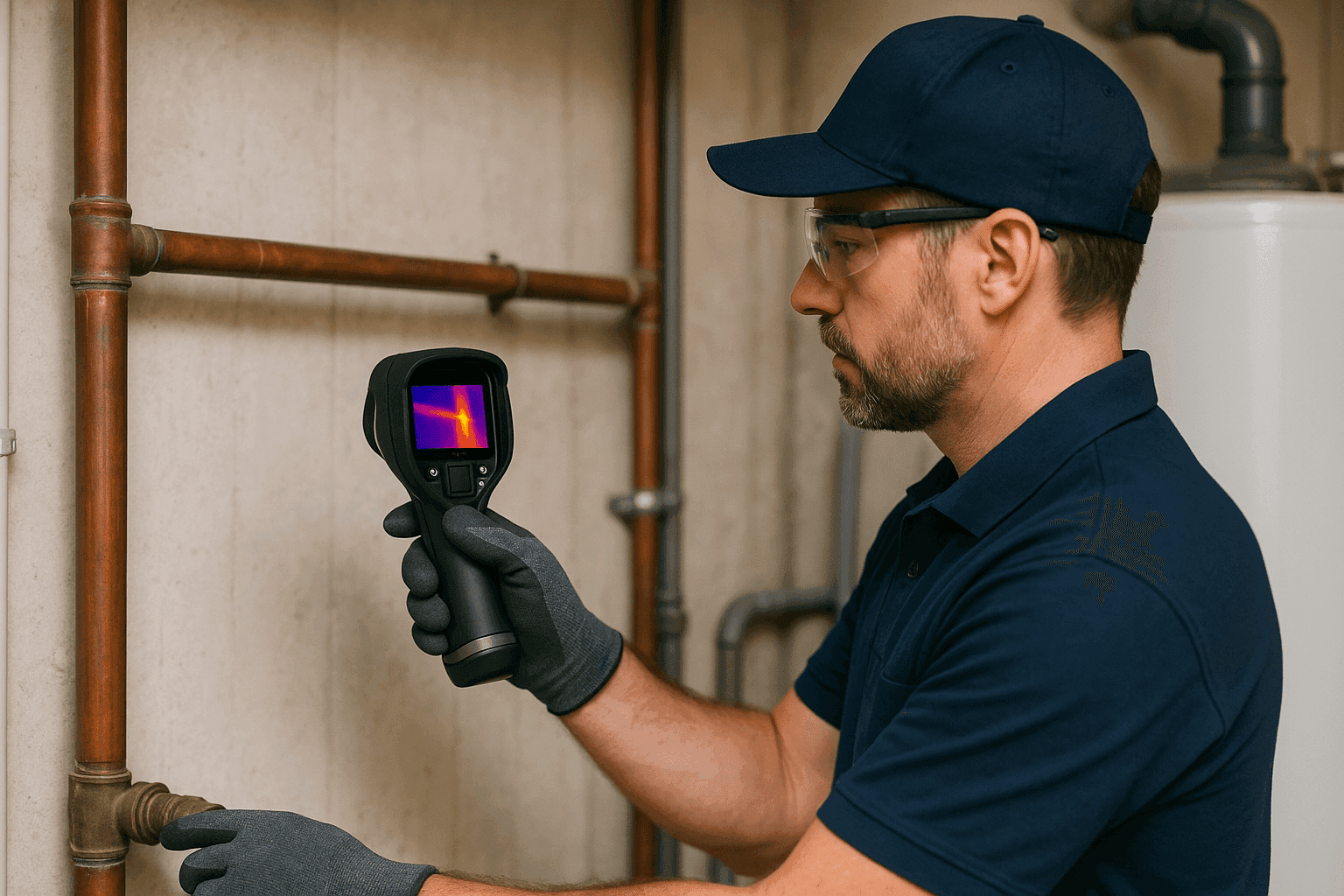
- Thermal Imaging Cameras: These spot temperature differences behind walls or under floors, revealing hidden leaks.
- Acoustic Sensors: They “listen” for the sound of water escaping from pipes, even through thick concrete.
- Moisture Meters: Measure how wet building materials are, pinpointing leak locations.
- Video Pipe Inspection: Tiny cameras snake through pipes to find cracks, roots, or breaks.
The Process
- Visual Inspection: Plumbers check all accessible plumbing, looking for obvious clues.
- Testing: They may use pressure tests or dye to trace the leak.
- Pinpointing: Using tools, they narrow down the exact location—saving you from unnecessary wall or floor damage.
- Repair: Depending on the problem, they’ll suggest pipe repair, replacement, or other solutions.
Licensed plumbers follow plumbing codes and safety standards, like those from the International Association of Plumbing and Mechanical Officials (IAPMO) or National Fire Protection Association (NFPA) for gas lines.
DIY Fixes for Minor Leaks (And When to Call for Help)
Some small leaks are within reach for a handy homeowner or business owner. Here’s what you can try:
Temporary DIY Fixes
- Tighten loose fittings under sinks or at connections.
- Replace worn washers in faucets or hose bibs.
- Use plumber’s tape on threaded joints for a snug fit.
- Apply pipe repair epoxy as a short-term patch for small pinhole leaks (follow package directions).
Know When to Stop
- If you need to cut into walls or floors, call a pro.
- If the leak is in a main water line, sewer line, or gas line, don’t attempt a repair yourself.
- If a repair doesn’t hold, don’t keep trying—persistent leaks need professional attention.
Attempting major repairs without the right skills or tools can make things worse. For anything beyond a simple fix, it’s safer—and often cheaper in the long run—to call a licensed plumber.
Prevention & Maintenance: Keeping Leaks at Bay 🛠️
An ounce of prevention is worth a pound of drywall. Regular maintenance can keep leaks from ever starting.
Practical Tips
- Inspect pipes and fixtures every few months.
- Check for corrosion or mineral buildup.
- Insulate pipes to prevent freezing in cold weather.
- Don’t ignore slow drains or gurgling toilets—these can signal bigger issues.
- Schedule annual plumbing inspections.
- Install water leak detectors or smart sensors for early alerts.
- Know where your main shutoff valve is—and label it.
Regular checkups, like annual backflow testing or water heater maintenance, can catch problems before they escalate. The Environmental Protection Agency (EPA) recommends fixing leaks promptly to conserve water and prevent property damage.
Costs & Time Factors: What to Expect
Every leak is different. Some take minutes to fix, others require more extensive work. Here’s what can affect the time and cost:
- Location: Leaks behind walls or under slabs take longer to find and fix.
- Severity: Small drips are quick; burst pipes or major breaks take more time.
- Access: Hard-to-reach pipes may require removing drywall or flooring.
- Parts: Some repairs need new sections of pipe, valves, or fixtures.
A simple faucet leak might be fixed in under an hour. More complex leaks—like those in sewer lines or under floors—can take a day or more. Costs vary widely, but catching leaks early almost always saves money compared to waiting until damage spreads.
When It’s an Emergency (And What to Do)
Some leaks can’t wait. If water is gushing, flooding, or threatening your property, act fast.
Emergency plumbing situations include:
- Burst pipes
- Major water heater leaks
- Sewer backups
- Flooding near electrical panels
- Gas line leaks
What to do:
- Shut off your main water valve.
- Turn off power if water is near outlets or appliances.
- Move valuables and electronics to a dry area.
- Call an emergency plumbing service immediately.
Quick action can mean the difference between a quick repair and a major renovation.
FAQ: Hidden Leak Edition
How can I tell if a leak is behind a wall?
Look for damp spots, bubbling paint, or moldy smells. If you hear water running when everything is off, that’s another clue. Professionals use tools like thermal cameras to confirm.
Are hidden leaks covered by insurance?
Some policies cover sudden, accidental leaks but not gradual damage from neglected maintenance. Check your policy and keep records of inspections and repairs.
Can small leaks really cause big problems?
Absolutely. Even a slow drip can rot wood, grow mold, and ruin drywall over time. The longer you wait, the worse—and more expensive—it gets.
What’s the difference between a plumbing leak and a slab leak?
A plumbing leak can happen anywhere. A slab leak is a leak in pipes under your home’s concrete foundation. These require special tools and professional attention.
Special Considerations for Leak Detection & Repair
- Older buildings may have outdated pipes more prone to leaks.
- Commercial properties often have more complex plumbing systems—regular inspections are crucial.
- Backflow prevention and regular testing keep drinking water safe.
- Gas lines require extra caution and must be handled by certified professionals.
- Water filtration systems can help prevent mineral buildup that leads to leaks.
Always follow local plumbing codes and safety standards. The American Society of Plumbing Engineers (ASPE) and the Occupational Safety and Health Administration (OSHA) provide guidelines for safe plumbing practices.
Hidden leaks don’t have to be a nightmare. With the right knowledge—and a little vigilance—you can protect your property, your wallet, and your peace of mind.
Call Renegar Plumbing now — or reach us anytime at 888-899-9250 .