How to Unclog a Toilet Safely and Effectively
You flush. The water rises. Suddenly, you’re staring at a swirling, rising mess—panic sets in. Few household problems feel as urgent or embarrassing as a clogged toilet, especially when you’ve got a house full of guests or a busy family evening underway. At Renegar Plumbing, we've seen every type of clog imaginable, from the simple to the truly stubborn.
It’s tempting to panic or reach for quick-fix chemicals. But with some know-how and the right tools, many toilet clogs can be handled safely at home. And when they can’t, our emergency plumbing team is standing by 24/7.
What Causes Toilet Clogs? 🚽
Toilets aren’t picky, but they do have limits. Clogs usually happen when something blocks the drain pipe—think of it like a traffic jam in your plumbing’s main street. Common culprits:
- Too much toilet paper in one flush
- Flushing wipes, paper towels, or feminine hygiene products
- Small toys (kids are creative!)
- Hard water buildup or an older, low-flow toilet
- Underlying sewer line issues
Sometimes, it’s just bad timing—a minor blockage worsens when another flush adds to the pileup.
Quick Safety Checklist Before You Start
Before rolling up your sleeves, pause for a moment. Plumbing mishaps can get messy, and safety matters even for a simple clog.
- Wear rubber gloves to avoid contact with germs.
- Place old towels or newspaper around the toilet to catch spills.
- Make sure the toilet isn’t overflowing—if it is, remove the tank lid and push the flapper down to stop water flow.
- Never mix chemical drain cleaners with other cleaning products; toxic fumes can result.
- Keep kids and pets away from your work area.
A little prep keeps you safe and your bathroom cleaner.
DIY: Unclogging a Toilet Step-by-Step
You don’t need a toolbox the size of your car. The right tool for most clogs? A sturdy plunger, and sometimes a plumber’s auger (toilet snake) or enzyme-based cleaner.
What You’ll Need
- Flange plunger (the type with a bell-shaped bottom)
- Toilet auger (for tougher clogs)
- Enzyme-based toilet-safe cleaner
- Rubber gloves and old towels
Step 1: Check the Water Level
If the bowl looks like it might overflow, remove some water using a small container. Slow and steady wins this race.
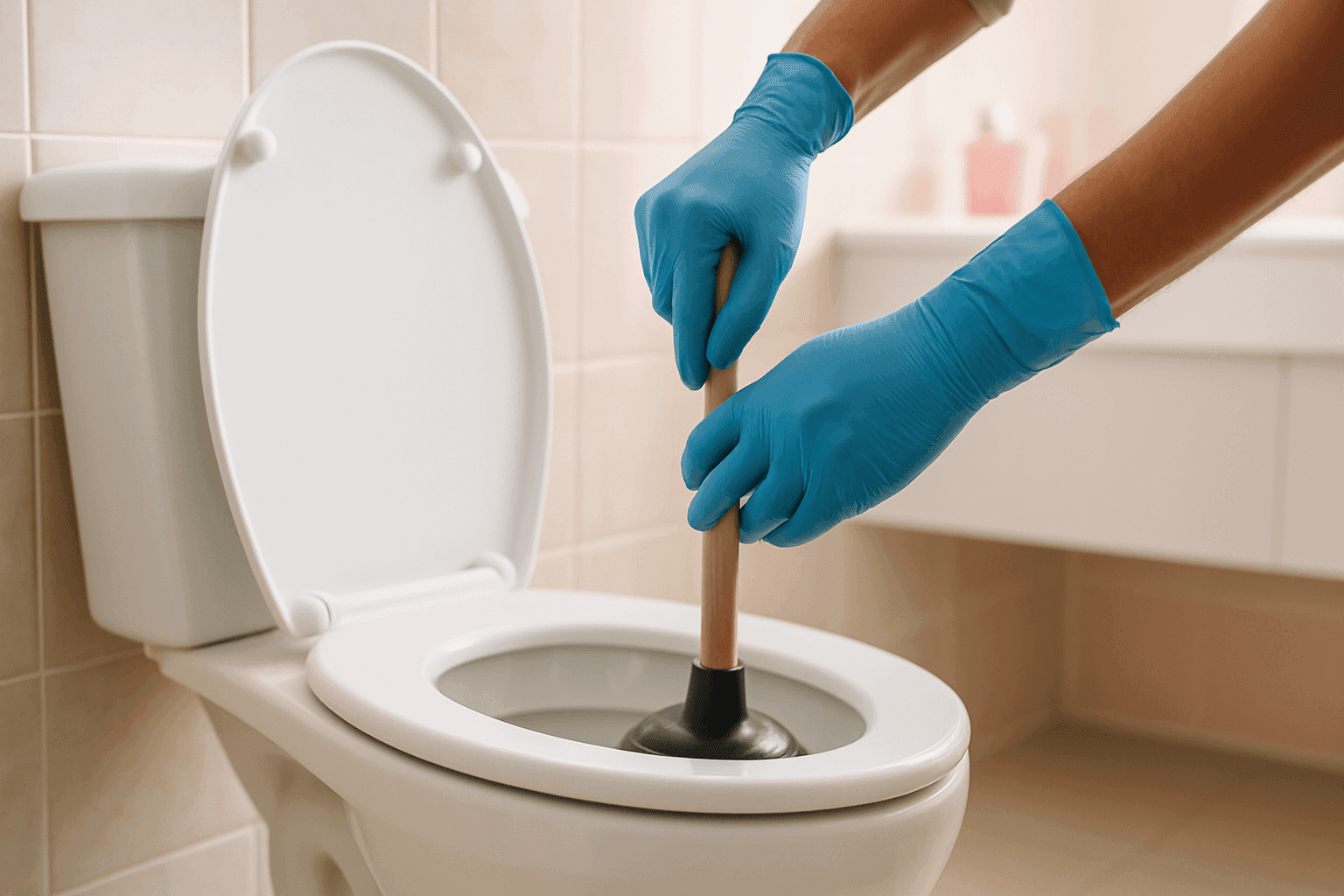
Step 2: Try the Plunger
- Place the plunger so it forms a tight seal over the hole.
- Push down gently at first to release air, then plunge vigorously—up and down—keeping the seal.
- After 15–20 seconds, lift the plunger. If water drains, success! If not, repeat a few times.
Step 3: Use a Toilet Auger
If plunging fails, bring in the auger.
- Feed the flexible end into the drain until you feel resistance.
- Crank the handle slowly—like threading a needle through stubborn fabric.
- Once you break up the blockage, retract the auger and try flushing.
Step 4: Enzyme Cleaner (Optional)
For slow drains (not full backups), pour enzyme-based cleaner in and let it sit overnight. These products break down organic waste without harming your pipes.
Step 5: Clean Up
Sanitize the plunger, auger, and any surfaces you touched. Wash your hands thoroughly.
Common Mistakes to Avoid
- Flushing repeatedly—can cause overflow and a bigger mess.
- Using wire hangers—these can scratch the porcelain or damage pipes.
- Pouring harsh chemicals—may not work and can harm plumbing or your health.
- Ignoring persistent clogs—recurring issues often indicate bigger problems.
DIY vs. Call a Pro
Most single clogs can be handled with patience and the right tool. But sometimes, it’s time to step back and call Renegar Plumbing:
- The water keeps backing up, even after several attempts
- Multiple drains in your home are slow or clogged
- You suspect a child’s toy or hard object is stuck
- There’s sewage backup or foul smells (possible sewer line issue)
- You’re dealing with repeated clogs—could be a deeper plumbing problem
When in doubt, don’t risk damaging your pipes or flooding your home. Emergency plumbing services exist for these moments.
What Pros Do On Arrival
When our crew shows up, they come prepared—not just with plungers, but with years of experience and specialized tools.
- Assessment: We’ll inspect the toilet and nearby drains, sometimes using a small camera to check for deeper blockages.
- Professional-Grade Augers: If needed, we use heavier-duty augers or hydro-jetting equipment (for severe clogs).
- Sewer Line Inspection: If there are bigger issues downstream, we’ll check your main sewer line for root intrusion or buildup.
- Cleanup: We leave your bathroom as clean as we found it, and explain the cause, so you’re not left in the dark.
We follow local plumbing codes and safety standards, like those set by the International Association of Plumbing and Mechanical Officials (IAPMO).
Prevention & Maintenance Tips
The best clog is the one that never happens. Here’s how to keep things flowing smoothly:
- Flush only toilet paper (no wipes, no paper towels, no “flushable” anything)
- Limit toilet paper per flush—less is more
- Keep a small trash bin nearby for non-flushable items
- Teach kids what can’t go down the toilet
- Schedule annual plumbing inspections (especially in older homes)
- Consider enzyme-based drain cleaners monthly to break down buildup
- Install a water softener if hard water is an issue
Recommended Products:
- Flange plunger (professional style)
- Toilet auger (6-foot, rubber coated)
- Eco-friendly enzyme cleaner (check for EPA Safer Choice label)
Costs & Time Factors
How much time and money will this take? It depends.
- DIY fixes: Plunging may take 5–10 minutes; augering, 10–20.
- Enzyme cleaners: Plan for overnight.
- Professional help: Most home visits last 30–60 minutes, though severe sewer line issues may take longer.
Costs vary based on severity and the need for advanced tools or repairs. Always ask for a clear explanation of what’s needed.
When It’s an Emergency
Overflowing toilet in the middle of the night? Raw sewage or water rising fast? That’s an emergency.
- Shut off the water (valve behind the toilet)
- Avoid using other plumbing fixtures if main drain is clogged
- Call Renegar Plumbing’s emergency plumbing service immediately—anytime, day or night
Fast action limits water damage and health risks.
FAQ: Unclogging Toilets
Q: Can I use a chemical drain cleaner?
A: Most chemical cleaners are too harsh for toilets and can damage pipes or create toxic fumes. Stick with enzyme-based cleaners for safety.
Q: Why does my toilet keep clogging?
A: Recurring clogs often mean there’s a deeper issue—like a partial blockage in the main line, mineral buildup, or an old, low-flow toilet that doesn’t flush well.
Q: What’s the best plunger?
A: A flange plunger (the kind with the extra rubber lip) is made for toilets and forms a better seal than old-style cup plungers.
Q: My toilet is making gurgling noises—should I worry?
A: Gurgling can mean a vent or drain is partially blocked. It’s a sign to check things out before a full-blown backup.
Local & Seasonal Considerations
In colder months, pipes can freeze and block drains; in older homes, tree roots might invade sewer lines. If you live in an area with hard water or older plumbing, regular preventative maintenance is especially important.
Seasonal surges—like holiday gatherings—can stress your plumbing. Remind guests what not to flush, and keep a plunger handy just in case.
Don’t let a stubborn clog ruin your day. If your toilet won’t budge or you’re facing a true emergency, the Renegar Plumbing team is ready 24/7 to get things moving again.
Call Renegar Plumbing now — or reach us anytime at 888-899-9250 .