Water Quality and Health: Understanding What’s in Your Tap
Every time you fill a glass from the tap, you expect it to be safe. Clean. Maybe even refreshing after a long day. But what if there’s more in that water than you bargained for?
At Renegar Plumbing, we see what hides in pipes and fixtures across thousands of homes. We know the risks—and the relief when families find out what’s really in their water. Let’s break down what you need to know, why it matters for your health, and how to take action if you’re concerned.
What’s Lurking in Your Tap Water? 🧪
Think of your plumbing system as a river. It flows from far-off sources, winding through treatment plants, city lines, and finally into the pipes under your home. Along the way, it can pick up travelers—some harmless, some not.
Common tap water contaminants:
- Lead: Like a silent hitchhiker, lead sneaks in through old pipes and solder, especially in homes built before 1986. Even tiny amounts can harm children’s brains and nervous systems.
- Chlorine: Used to kill bacteria, but too much can leave a strong taste and, over time, may form byproducts linked to health concerns.
- Bacteria: Think E. coli or coliforms—microscopic invaders that love damp, neglected pipes and can cause stomach troubles.
- Hard minerals: High calcium or magnesium won’t usually make you sick, but can clog appliances and leave spots on dishes.
- Other risks: Pesticides, nitrates, and industrial chemicals sometimes slip past treatment, especially after storms or system failures.
Quick Safety Checklist
How do you know if your water is safe? Start with your senses and a few simple questions:
- Does the water smell like bleach, earth, or rotten eggs?
- Is it cloudy, yellow, or rusty?
- Do you see bits of sand, dirt, or white flakes?
- Any unexplained stains in sinks or tubs?
- Do you have older pipes (pre-1986)?
- Has anyone in your home had recurring stomach issues?
- Is your neighborhood prone to water main breaks or flooding?
If you checked “yes” to any, don’t panic—but don’t ignore it either.
DIY Testing vs. Calling an Emergency Plumbing Pro
Testing your water can be as easy as using a pool test strip. But for peace of mind, or if you suspect something serious, a pro’s approach goes much deeper.
DIY options:
- Home test kits: Available at hardware stores, these check for chlorine, lead, hardness, and bacteria. Follow the directions carefully. Keep in mind: most kits offer a snapshot, not a full picture.
- Boil and observe: Boiling can kill bacteria, but won’t remove lead or chemicals.
- Check your annual water report: Your city provides one every year. Still, it may not show issues unique to your home.
Call Renegar Plumbing if:
- Your water tests positive for lead, bacteria, or any weird chemicals.
- You notice sudden changes in taste, color, or pressure.
- You need water heater repair near you—sometimes heater issues reveal hidden water quality problems.
- You’re worried about infants, elderly, or immune-compromised family members.
What the Pros Do When They Arrive
When you call Renegar Plumbing for emergency plumbing or water quality concerns, here’s what happens:
- Visual inspection: We check fixtures, pipes, and the main supply for signs of corrosion, leaks, or contamination.
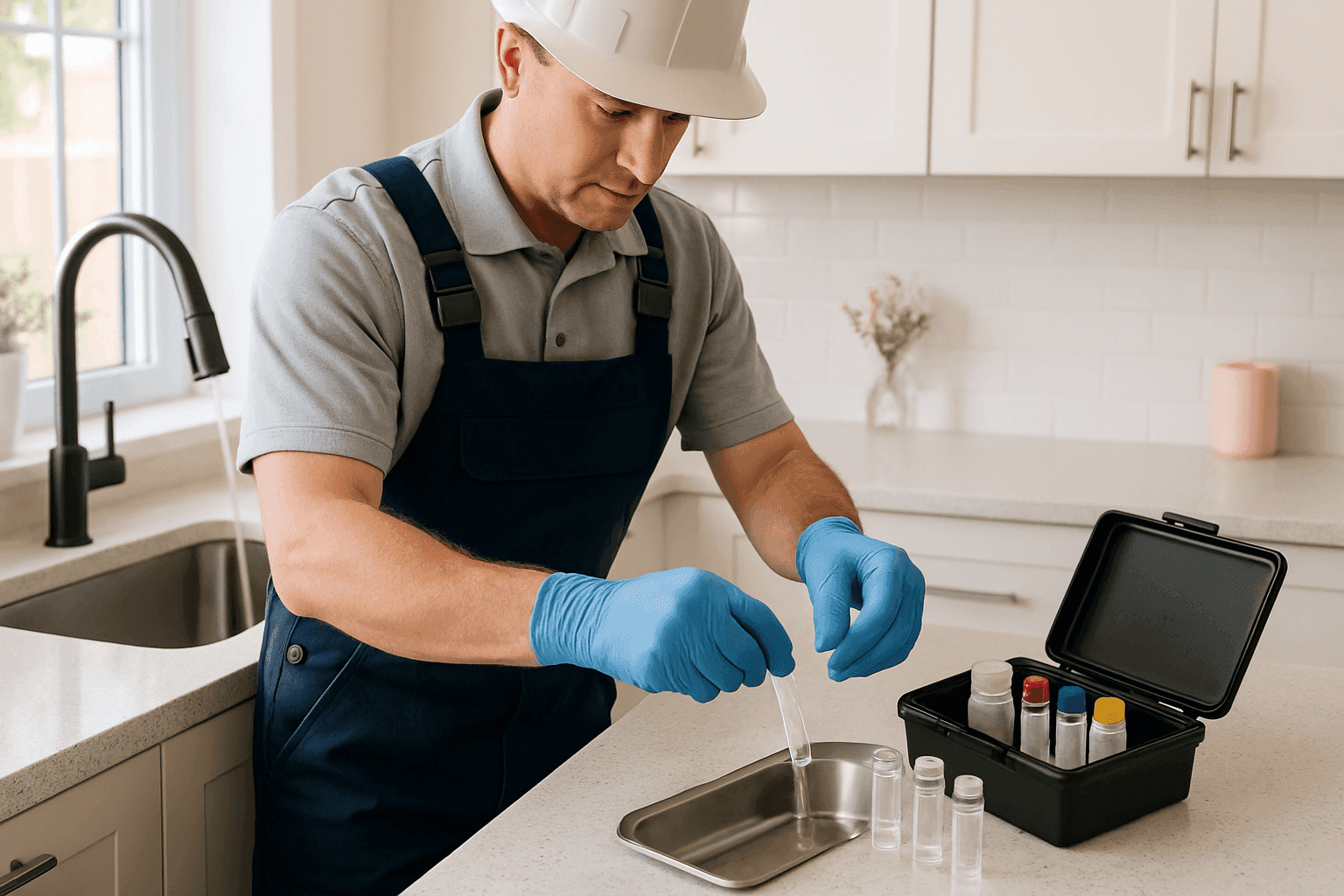
- On-site testing: Certified technicians use multi-parameter meters and lab-grade kits to test for chlorine, pH, lead, and bacteria.
- Sample collection: If something unusual pops up, we send samples to a state-accredited lab, following protocols from the EPA’s Safe Drinking Water Act.
- Diagnosis: We pinpoint the source—whether it’s a failing water heater, deteriorating pipe, or cross-contamination from a sewer line.
- Clear recommendations: Real solutions, from pipe repair to filtration systems or backflow prevention.
Our plumbers hold state-issued licenses and undergo regular safety training. We follow local code and EPA standards for every water test and repair.
Filtration and Treatment Options: What Works?
Not all filters are created equal. Choosing the right one is like picking the best umbrella in a downpour: you need the right fit for the storm.
Common filtration and treatment solutions:
- Activated carbon filters: Good for chlorine, some pesticides, and bad tastes. Not effective for lead or bacteria.
- Reverse osmosis: Removes most contaminants, including lead, nitrates, and some bacteria. Requires professional installation and ongoing maintenance.
- Water softeners: Tackle hard minerals, but not chemicals or germs.
- UV light systems: Zap bacteria and viruses, ideal for well water.
- Whole-house systems: Protect every tap, but cost more up front.
Always choose filters certified by NSF International or the Water Quality Association. Look for models tested for your specific concerns.
EPA Guidelines: What’s “Safe” Water?
According to the U.S. Environmental Protection Agency (EPA):
- Lead: No safe level in drinking water. The EPA’s action level is 15 parts per billion (ppb), but health experts urge even lower.
- Chlorine: Up to 4 parts per million (ppm) is allowed. Higher levels can cause skin and eye irritation.
- Coliform bacteria: Should be absent in any water sample. Their presence means further testing is needed.
You can review the EPA’s full standards in their National Primary Drinking Water Regulations.
Renegar Plumbing’s Water Testing Process
We’ve helped local families uncover hidden problems and restore confidence in their water. Here’s how we do it:
- Initial consultation: We listen to your concerns and history—no detail is too small.
- Testing and analysis: Using certified equipment, we test for lead, chlorine, bacteria, pH, and hardness—right at your kitchen sink.
- Clear results: We explain what’s in your water, what’s safe, and what needs fixing.
- Tailored action plan: Whether it’s a quick fixture installation, leak repair, or a full repiping, you’ll know your options.
Local Case Study
A family in a 1970s home called about brown stains in their tub. Our technician traced the issue to rust and lead leaching from old galvanized pipes. After testing and confirming the risks, we replaced the problem pipes and installed a certified filter. Their water cleared up overnight. Relief—and peace of mind—followed.
Prevention & Maintenance: Keep Your Water Safe
You wouldn’t drive your car without oil changes. Your plumbing needs regular attention, too.
- Annual water testing: Especially if you have older pipes or a private well.
- Replace aging pipes: Copper or PEX pipes are less likely to leach lead.
- Flush taps: Let water run for 30 seconds every morning, especially after vacations.
- Clean aerators: Unscrew and rinse faucet screens monthly.
- Schedule backflow testing: Prevents dirty water from reversing into your clean supply.
- Fix leaks fast: Even a slow drip can invite bacteria and rust.
Costs & Time Factors
Worried about the expense? Here’s what to expect:
- Home test kits: Usually $20–$50, but limited in scope.
- Professional water testing: Ranges from $100–$400, depending on contaminants checked.
- Filtration systems: Simple faucet filters start at $30. Whole-house solutions can run into the thousands, plus installation.
- Pipe repair or replacement: Varies widely based on length, access, and materials. Most jobs completed within a day or two.
- Emergency plumbing: Immediate service available, with after-hours rates for true emergencies.
The value: clean water, safer health, and no surprises.
When It’s an Emergency
Some water issues can wait. Others can’t.
- Sudden loss of water pressure
- Visible contamination (brown, green, or black water)
- Sewage odor or backup
- Multiple family members feeling ill
- Flooded basement near the main water line
In these cases, call Renegar Plumbing for emergency plumbing right away. Your health could depend on it.
Frequently Asked Questions
How often should I test my tap water at home?
Test at least once a year, or immediately after plumbing work or nearby construction.
Can a water heater cause water quality problems?
Yes. Sediment buildup or corrosion inside a water heater can introduce rust, bacteria, or even lead fragments into your water. If you’re searching for “Water Heater Repair near you,” check if water quality is part of the issue.
Is bottled water safer than tap?
Not always. Bottled water is regulated by the FDA, while tap water follows EPA rules. Both can carry risks if storage or treatment is poor.
What’s the fastest way to fix bad-tasting water?
Start by cleaning faucet aerators and running the tap for a minute. If problems persist, a certified filter may help—call a licensed plumber to be sure.
Local and Seasonal Considerations
In our area, seasonal storms can stir up sediment and bacteria in city lines. Summer heat may stress pipes or cause algae blooms in water sources. After heavy rains or main breaks, always flush taps and consider a water test.
Older neighborhoods are more likely to have lead or galvanized pipes. If your home is vintage, be extra cautious.
Final Thoughts
Water is life. Don’t gamble with what’s coming out of your tap. Whether you need a quick water heater repair near you or a full plumbing assessment, Renegar Plumbing is here to help you breathe easy—glass by glass, day by day.
Call Renegar Plumbing now — or reach us anytime at 888-899-9250 .